
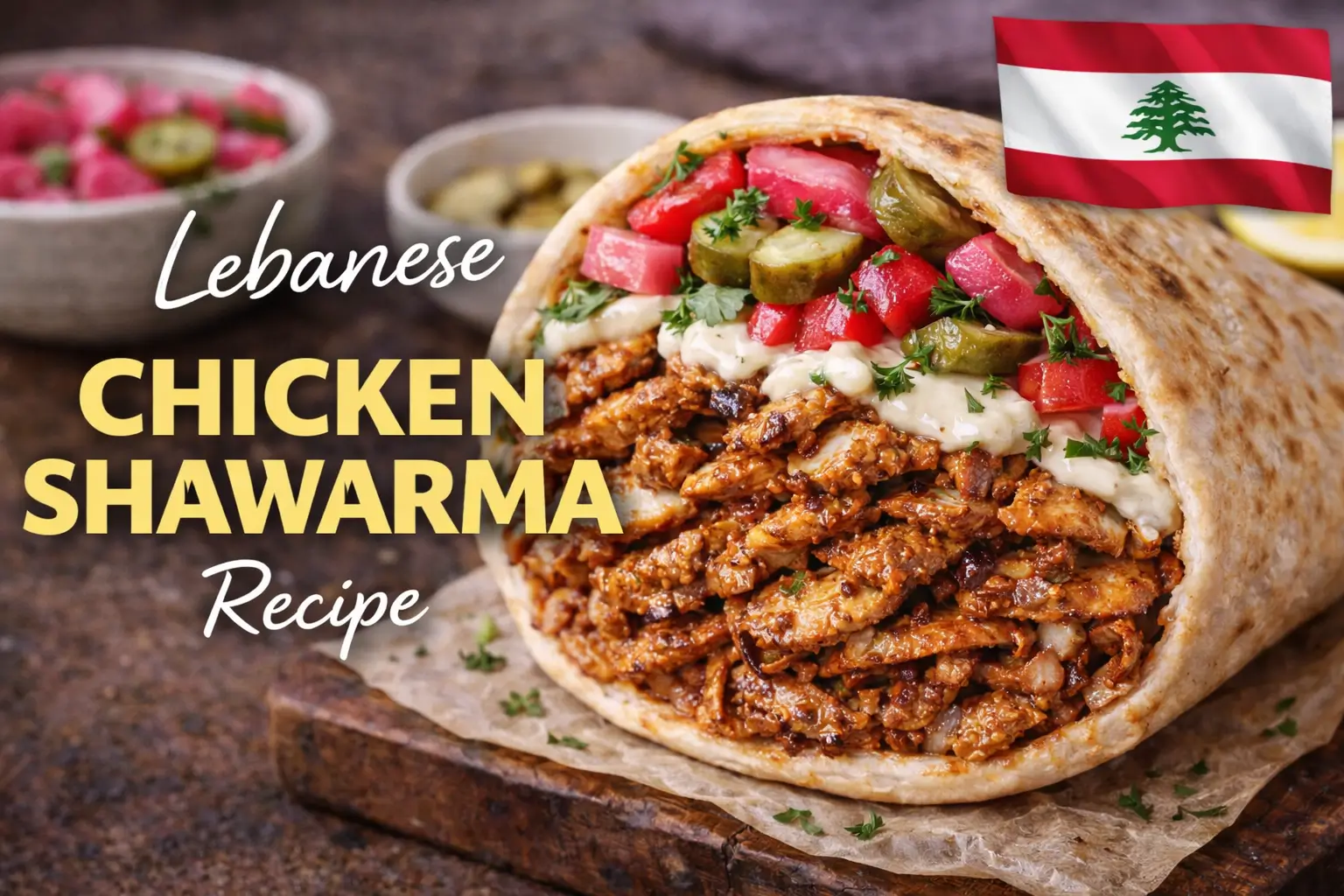
If you are looking for a truly authentic Lebanese chicken shawarma recipe, this guide is structured to reflect how it is prepared in traditional shawarma shops across Beirut and throughout Lebanon.
This is not a generic wrap. It is a method-focused, flavor-structured approach that prioritizes proper marinade ratios, correct spice layering, controlled heat, and authentic assembly.
Lebanese shawarma is known for balance. The marinade is aromatic but not overpowering. Acidity is present but refined. Garlic is bold yet integrated. The result is tender, lightly charred chicken wrapped with garlic sauce, pickles, and fresh vegetables in thin Lebanese flatbread.
If executed properly, the flavor is deep, warm, slightly tangy, and structurally cohesive.
What Defines an Authentic Lebanese Chicken Shawarma Recipe
Lebanese shawarma stands out within Levantine cuisine for its refined spice balance and clean flavor profile. The key defining elements include:
Yogurt-based marinade for tenderness
Fresh lemon juice for brightness
Warm spices such as cinnamon and allspice
Generous garlic
Vertical-style roasting adaptation at home
Garlic sauce (toum) as the primary condiment
Pickled turnips for acidity and color contrast
Unlike some regional versions, Lebanese shawarma avoids heavy sweetness or excessive vinegar sharpness. The emphasis is aromatic depth and controlled acidity.
Preparation Time
Prep Time: 25 minutes
Marination Time: 8–24 hours (overnight preferred)
Cook Time: 30–40 minutes
Total Active Time: About 1 hour
Ingredients (Serves 4–6)
For the Marinade
2 lbs (900g) boneless, skinless chicken thighs
3 tablespoons olive oil
4–5 garlic cloves, finely minced
½ cup plain full-fat yogurt
Juice of 1 large lemon
2 teaspoons paprika
1½ teaspoons ground cumin
1 teaspoon ground coriander
1 teaspoon ground allspice
½ teaspoon ground cinnamon
½ teaspoon turmeric
1 teaspoon salt
½ teaspoon black pepper
For Serving (Traditional Lebanese Style)
Lebanese pita or thin flatbread
Garlic sauce (toum)
Pickled turnips
Pickled cucumbers
Sliced tomatoes
Fresh parsley
Optional fries inside the wrap
This ingredient structure ensures the flavor remains faithful to a real Lebanese chicken shawarma recipe.
How to Make Lebanese Chicken Shawarma at Home
Step 1: Construct the Marinade Properly
In a mixing bowl, combine olive oil, garlic, yogurt, lemon juice, and all spices. Whisk until fully emulsified. The marinade should appear creamy, aromatic, and evenly colored.
Add chicken thighs and coat thoroughly. Ensure every surface is covered. Cover and refrigerate for at least eight hours. Overnight marination produces superior flavor penetration and tenderness.
The yogurt tenderizes muscle fibers. Lemon juice brightens. Oil supports even heat distribution. The spice blend delivers warmth without overpowering the natural chicken flavor.
Step 2: High-Heat Cooking for Authentic Texture
Preheat oven to 425°F (220°C). Arrange chicken in a single layer on a lined tray. Avoid overcrowding, which causes steaming instead of roasting.
Roast for 30–35 minutes until fully cooked. Finish under broil for 3–5 minutes to achieve caramelized edges that mimic vertical spit charring.
Internal temperature must reach 165°F (74°C).
Alternative method: Grill over medium-high heat for 6–8 minutes per side until charred and cooked through.
Caramelization is critical for depth and authenticity.
Step 3: Rest and Slice Thin
Allow the chicken to rest for 10 minutes before slicing. Slice thinly against the grain. Thin slicing creates the layered texture characteristic of Lebanese shawarma.
For enhanced authenticity, briefly toss sliced chicken in a hot skillet for 1–2 minutes to intensify flavor concentration.
Authentic Lebanese Shawarma Assembly
Warm the flatbread lightly. Spread a generous layer of garlic sauce. Add evenly distributed sliced chicken. Top with pickled turnips, cucumbers, tomatoes, and parsley.
Wrap tightly. Optionally, press the wrap on a hot pan for a lightly crisped exterior.
Lebanese shawarma should feel compact, structured, and balanced — not overloaded with sauce.
Flavor Profile Breakdown
A properly executed Lebanese chicken shawarma recipe delivers:
Aromatic warmth from allspice and cinnamon
Bright acidity from lemon
Creamy garlic richness from toum
Subtle smokiness from charred edges
Crisp acidity from pickled turnips
Each element serves a defined role. No single component should dominate.
Technical Tips for Restaurant-Level Results
Use chicken thighs only for moisture retention.
Do not skip yogurt in the marinade.
Maintain high heat for proper caramelization.
Always rest before slicing to retain juices.
Slice thin for authentic texture.
Execution precision defines authenticity.
Storage and Reheating
Refrigerate cooked shawarma for up to four days in an airtight container.
Reheat in a skillet over medium heat to preserve texture. Avoid microwaving, which softens the charred exterior.
Freeze for up to two months if sealed properly.
Recipe Summary for SEO
Recipe Name: Lebanese Chicken Shawarma Recipe
Cuisine: Lebanese / Middle Eastern
Course: Main Dish
Prep Time: 25 minutes
Marination: 8–24 hours
Cook Time: 30–40 minutes
Servings: 4–6
This authentic Lebanese chicken shawarma recipe features yogurt and lemon-marinated chicken thighs roasted or grilled until caramelized, thinly sliced, and wrapped in Lebanese flatbread with garlic sauce and pickled vegetables for true Beirut-style flavor.
Final Perspective
A true Lebanese chicken shawarma recipe is built on balance and technique. The marinade must be measured. The heat must be controlled. The slicing must be precise. When each step is executed correctly, the result mirrors the shawarma served in Beirut — aromatic, tender, lightly charred, and structurally cohesive.
Recent Posts
A perfectly roasted turkey should taste like turkey—not dry cotton wrapped in brown skin. Yet that is exactly what many home cooks produce. Why does it happen?Because turkey is large, uneven in...
Syrian Chicken Shawarma Recipe (Authentic Damascus-Style Method)
If you are searching for a Syrian chicken shawarma recipe that reflects how it is actually prepared in traditional shawarma shops in Damascus and throughout Syria, this guide focuses on precision:...